6. The Unexpected Arday: Playlists, Wall-Writing, Varsity and Public Radio
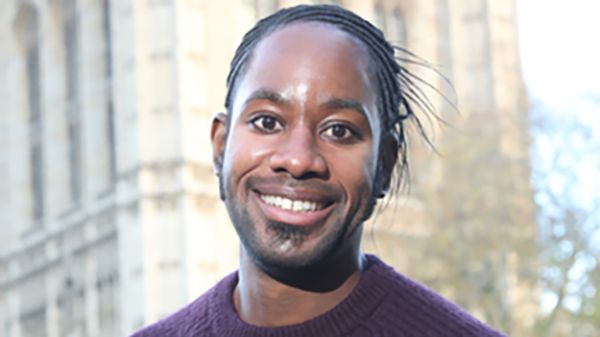
Jason Arday. Image: Faculty of Education / Jason Arday, from the .
Some of the best ways into Jason Arday’s life are side doors: a song, a sporting tradition, a sentence written on a wall, a radio programme, an unexpectedly generous decision. Together they show a person for whom education was inseparable from culture.
The wall. Cambridge’s profile records that, at twenty-seven and while studying for his doctorate, Arday wrote personal goals on a bedroom wall in his parents’ home. One read: “One day I will work at Oxford or Cambridge.” Goal-setting advice is usually tidy and corporate; this image is domestic, improvised and almost childlike. Ambition is placed where family life can see it.
The playlist. Music first appears in his story as a support for language. It later becomes research method and historical archive. Arday wrote about Cool Britannia from a multi-ethnic perspective and, according to Cambridge, was developing a book on Paul Simon’s Graceland, examining the ethical dilemmas around recording with Black South African musicians during apartheid. With Chantelle Jessica Lewis, he used 1990s songs to move between memory, Black neurodivergent experience and social theory. The path from lyrics as a childhood bridge to music as sociology is one of the most beautiful continuities in his work.
Mandela and rugby. Arday traced some of his interest in race, society and education to televised memories of Nelson Mandela’s release and South Africa’s 1995 Rugby World Cup victory. The pairing is revealing: political liberation and sporting symbolism, both encountered as mass culture. He treated television and popular music not as distractions from serious history but as places where people learn who belongs to a nation.
The varsity tradition. St Mary’s University says that, while serving as a students’ union sabbatical officer after his undergraduate studies, Arday launched an annual varsity contest with Brunel University. By 2024 it had become a sixteen-year tradition. This is legacy in a modest but durable form: generations of students participating in something whose founder many may never meet.
The first week. In Arday’s first week as Cambridge’s new professor, he chaired the closing roundtable at a university forum on Black awarding gaps and curriculum decolonisation. The Black Advisory Hub’s account describes spoken word, workshops, student co-facilitation and live illustration as well as academic panels. He entered the institution not only through ceremony, but through a room designed for students and staff to examine unequal outcomes together.
The guest editor. In December 2023, Arday joined the tradition of guest-editing BBC Radio 4’s Today programme. The broadcast focused on shame and stigma around low adult literacy and also revisited 1990s culture—two subjects that met directly in his life and scholarship. Contemporary programme reporting records the role. Guest editing mattered because it let him decide which questions a national audience would hear, not merely answer questions chosen by someone else.
The book advance. In 2023, Jesus College reported that Arday planned to donate a £20,000 advance for We See Things They’ll Never See to charities supporting neurodivergent working-class families. The gesture joined a book’s argument to material support for the people it described.
These moments suggest an Arday method:
- Put the ambition somewhere visible.
- Let popular culture carry serious questions.
- Build traditions other people can inherit.
- Use a new position immediately, while its possibilities are fresh.
- Turn access to a microphone into access for a neglected issue.
- Tie intellectual work to practical redistribution.
A remembrance event inspired by this method should not be a sequence of solemn speeches. It could include a 1990s listening room, a community sports fixture, adult-literacy organisations, spoken-word performers, a wall on which visitors write ambitious promises, and a small fund that turns those promises into tools.